

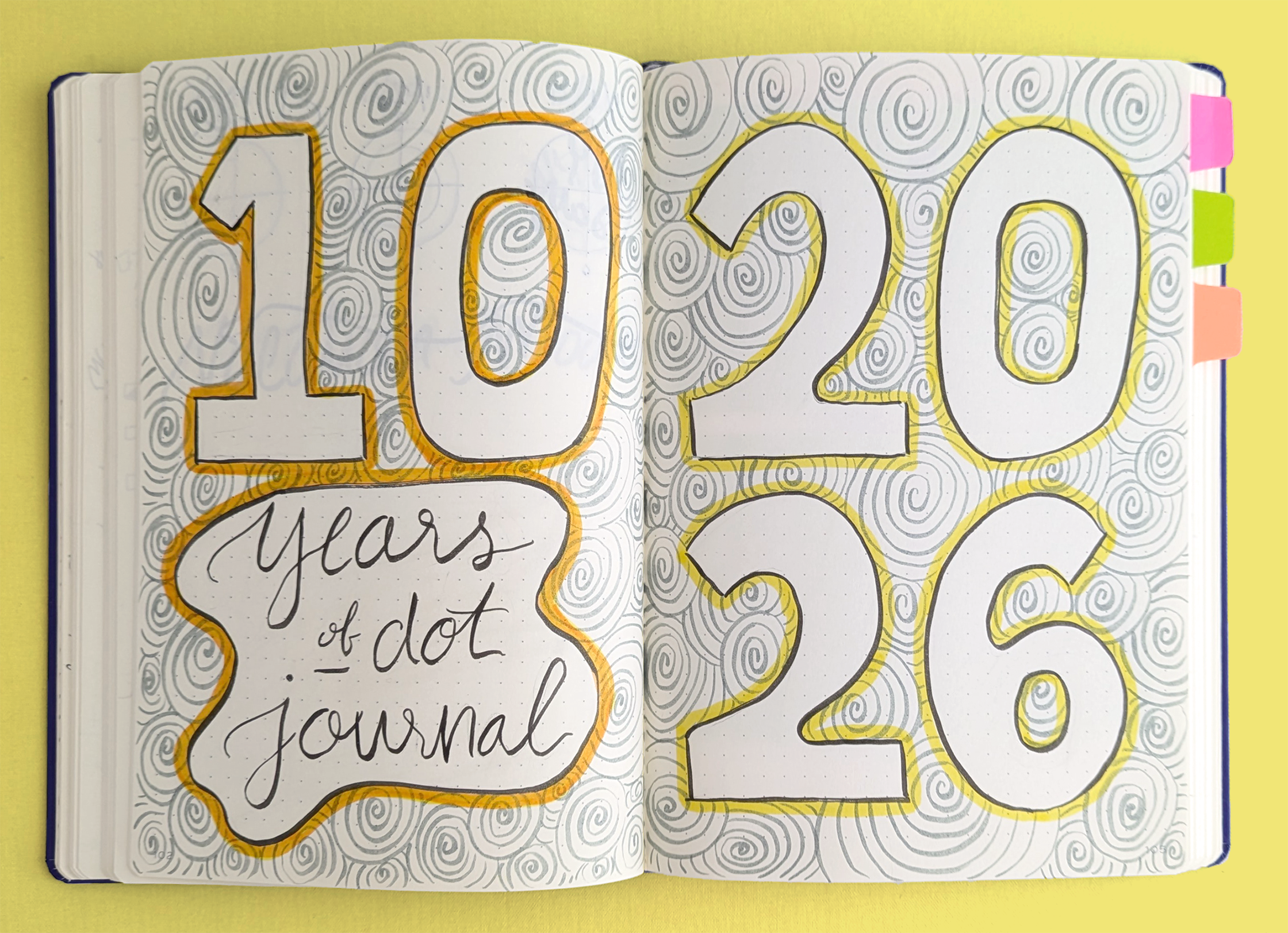
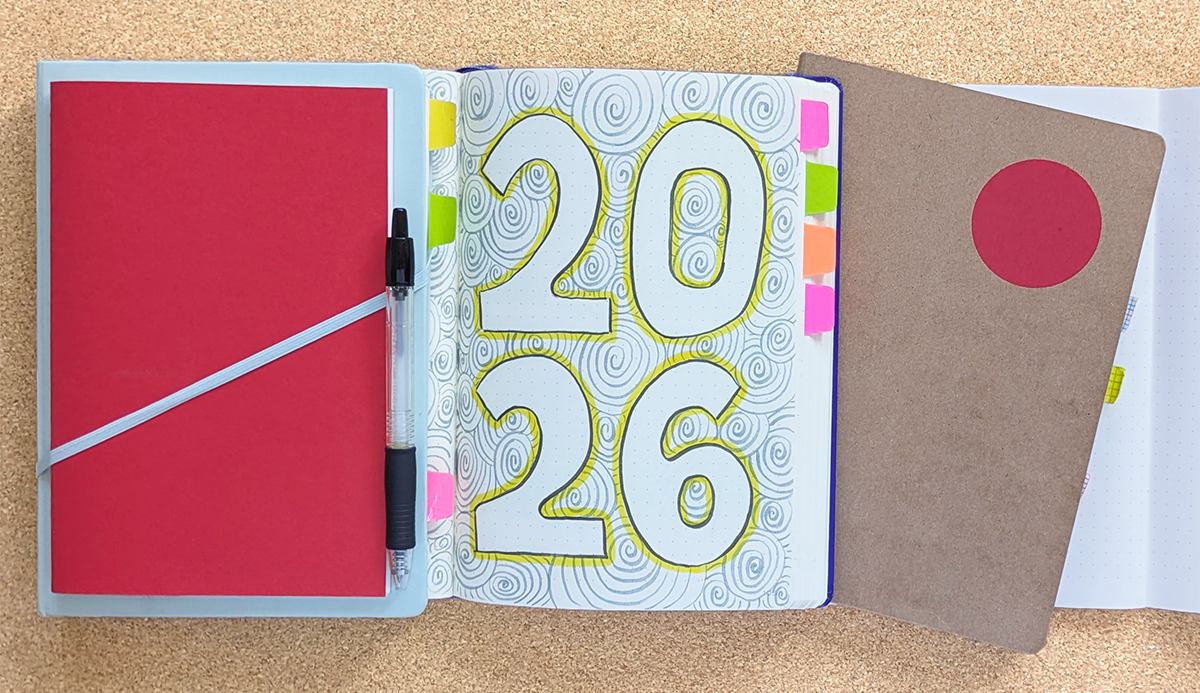
An anniversary snuck up on me. As I was preparing my 2026 dot journal pages and getting ready for an upcoming workshop, I’ve been looking back at the journal-filled section of my bookshelf. December 2025 marked exactly 10 years since I first started exploring the Bullet Journal Method and then went on to find other dot journaling techniques and started adapting them to fit my needs.
How I started
When I began, I had no idea this practice would stick around in my life for so long. I’d never been great at keeping up with planners; in college, I used them a little, but they were mostly left blank. Then, during a career transition, I needed to get organized around big goals and create structure for myself, while working from home.
At the time, I was down a rabbit hole researching organization methods and reading Getting Things Done — literally trying to understand how to get things done.
Flexibility is why it stuck
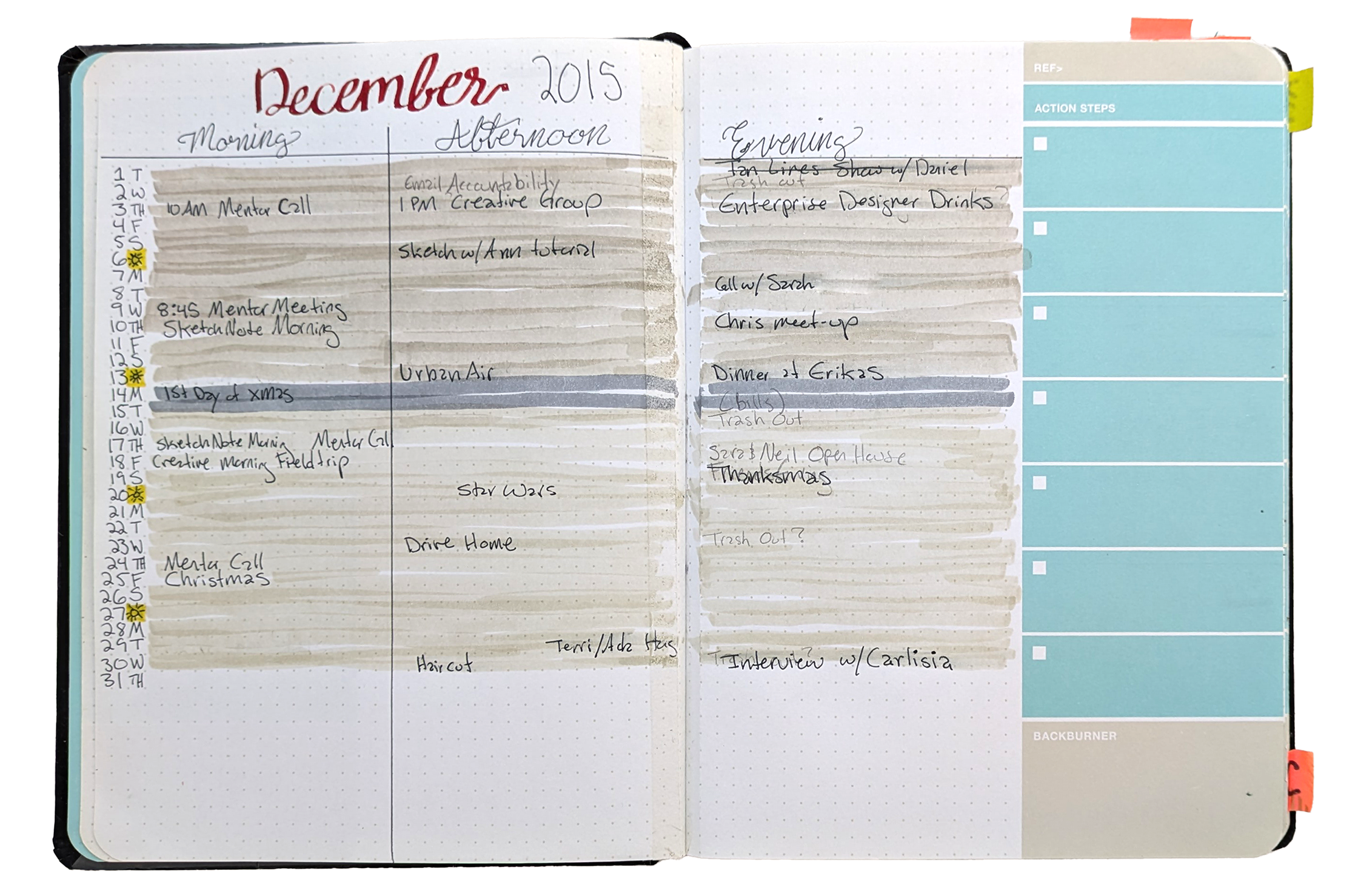
The way I think about dot journaling is that it’s not just one method, and it’s not for one thing. That flexibility is what’s allowed me to stick with it. When I first started, I used it in a very task-oriented way, like a self-made planner with an overview of what was happening in my month and lists of what I wanted to do.
The journal I started with was one I already had, which ironically included the smallest to-do list element on its pages. This let me get started without investing in a dated planner or worrying that I was wasting money on the endeavor.
Over time, I layered in other uses and techniques, naturally finding the elements that worked best for my life organization. As a physical tool, it's an adaptable touchstone for other habits and rituals important to me. It became a core element of my morning routines and helps me feel set for the day — a way to think about what's ahead without accidentally getting sucked into a screen.
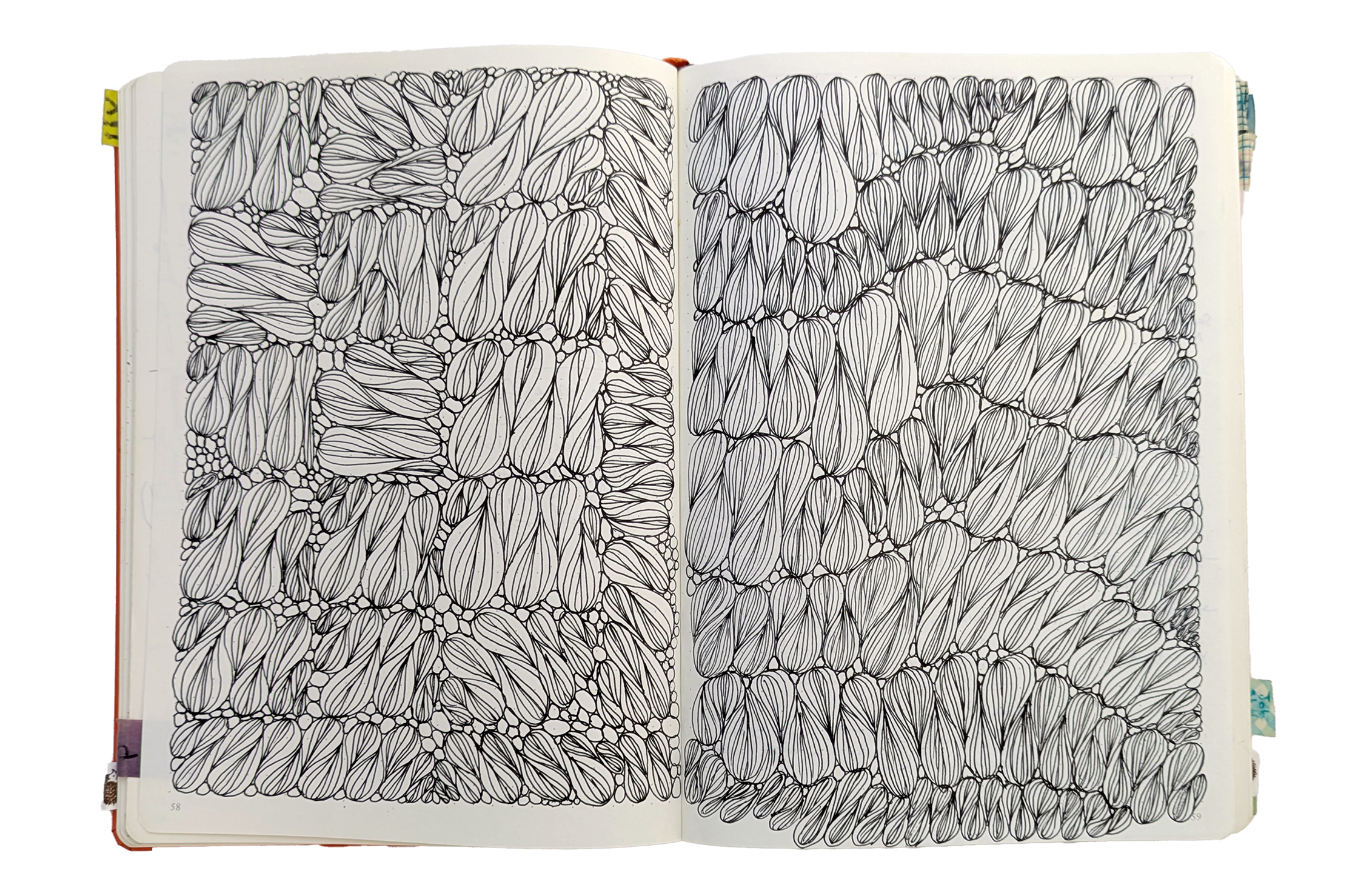
Flipping through journal pages is time-traveling
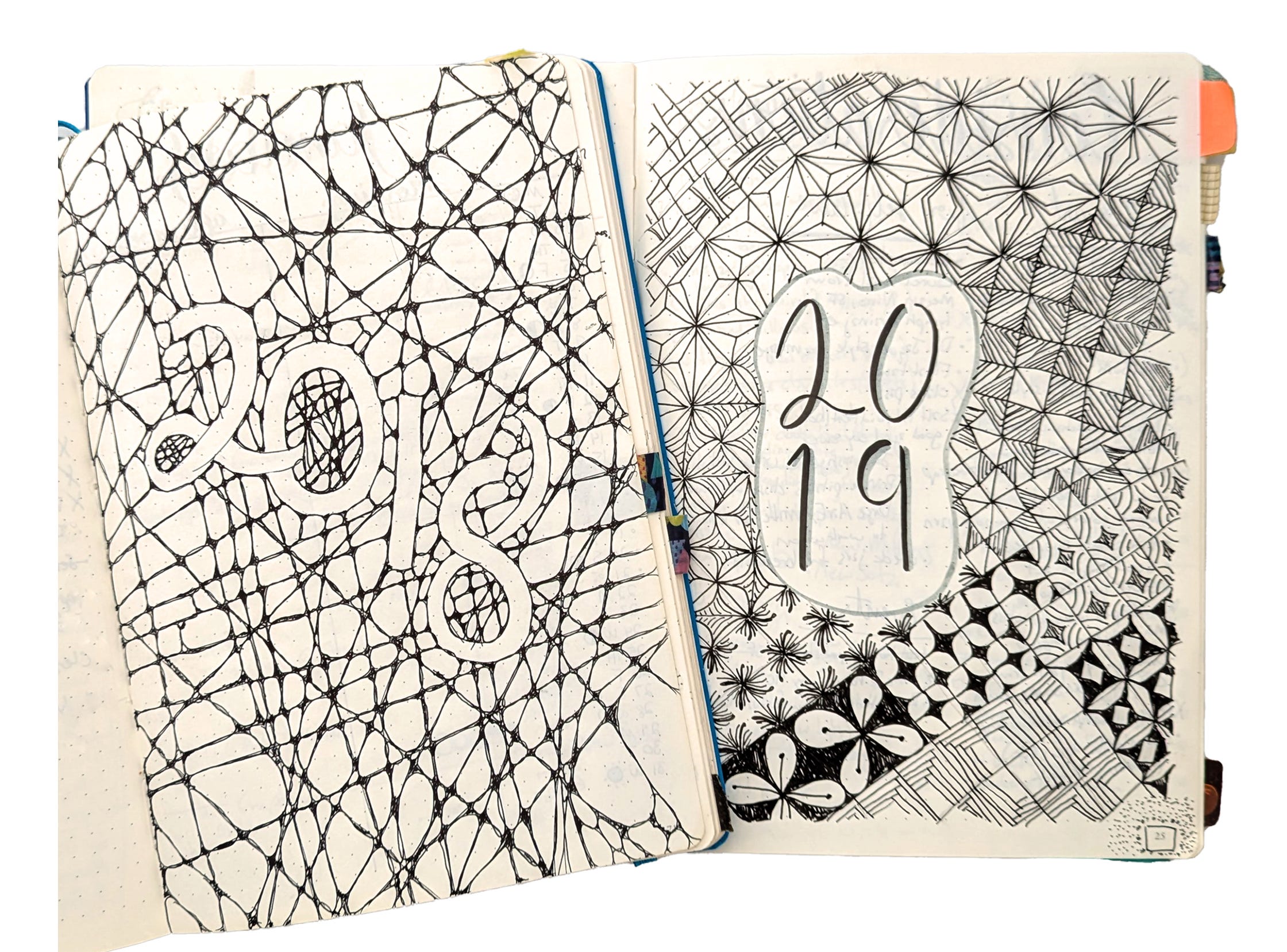
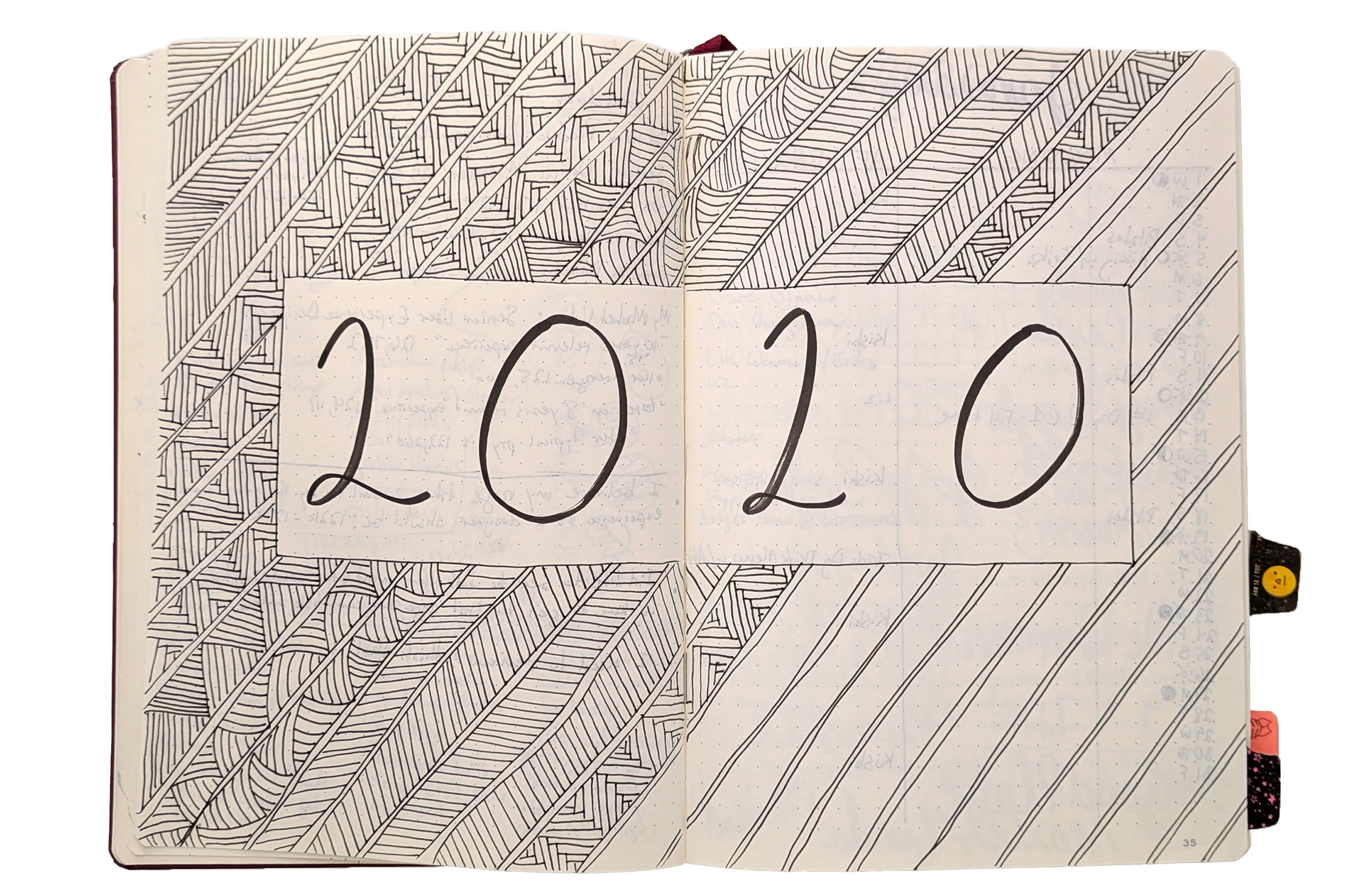
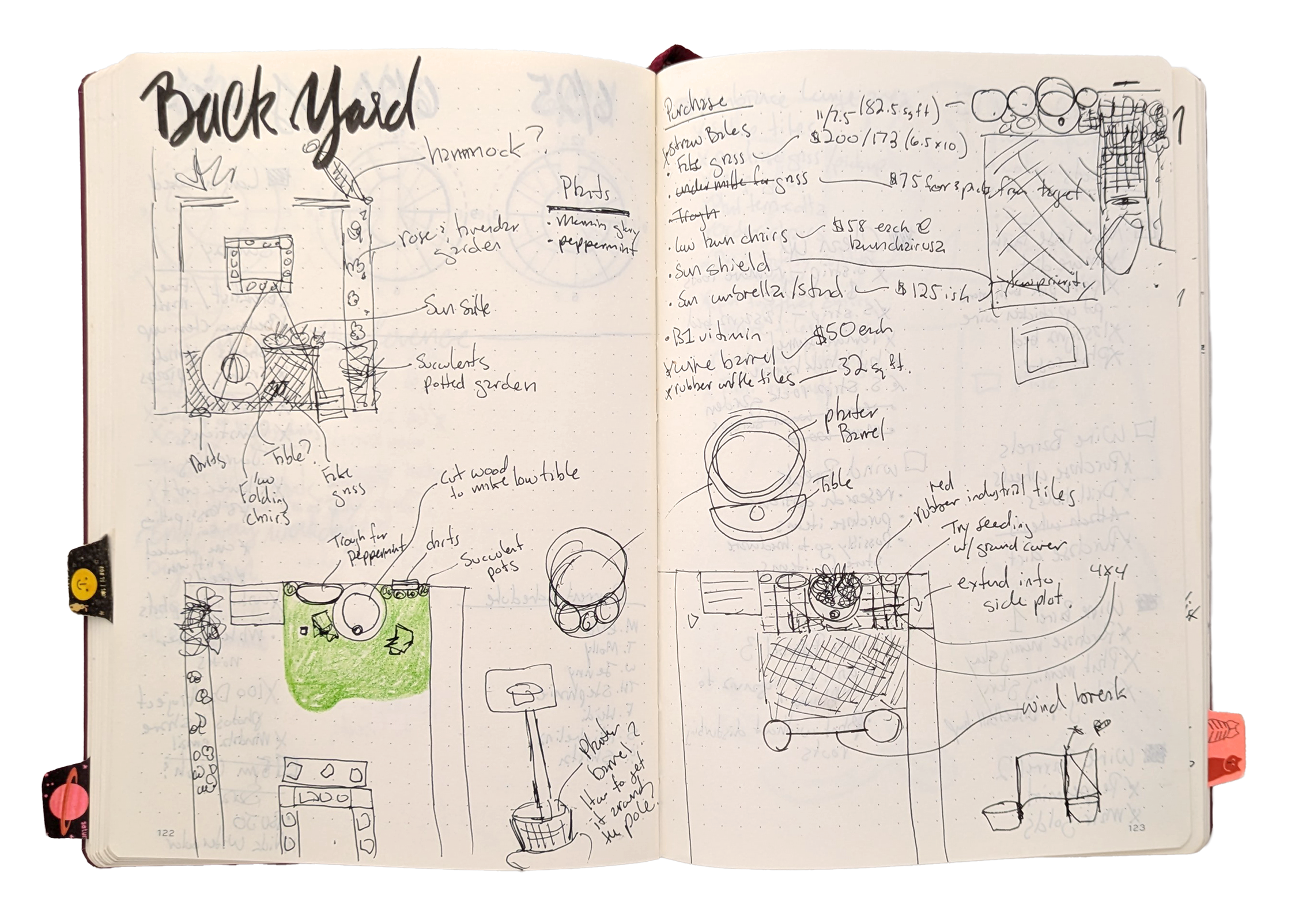
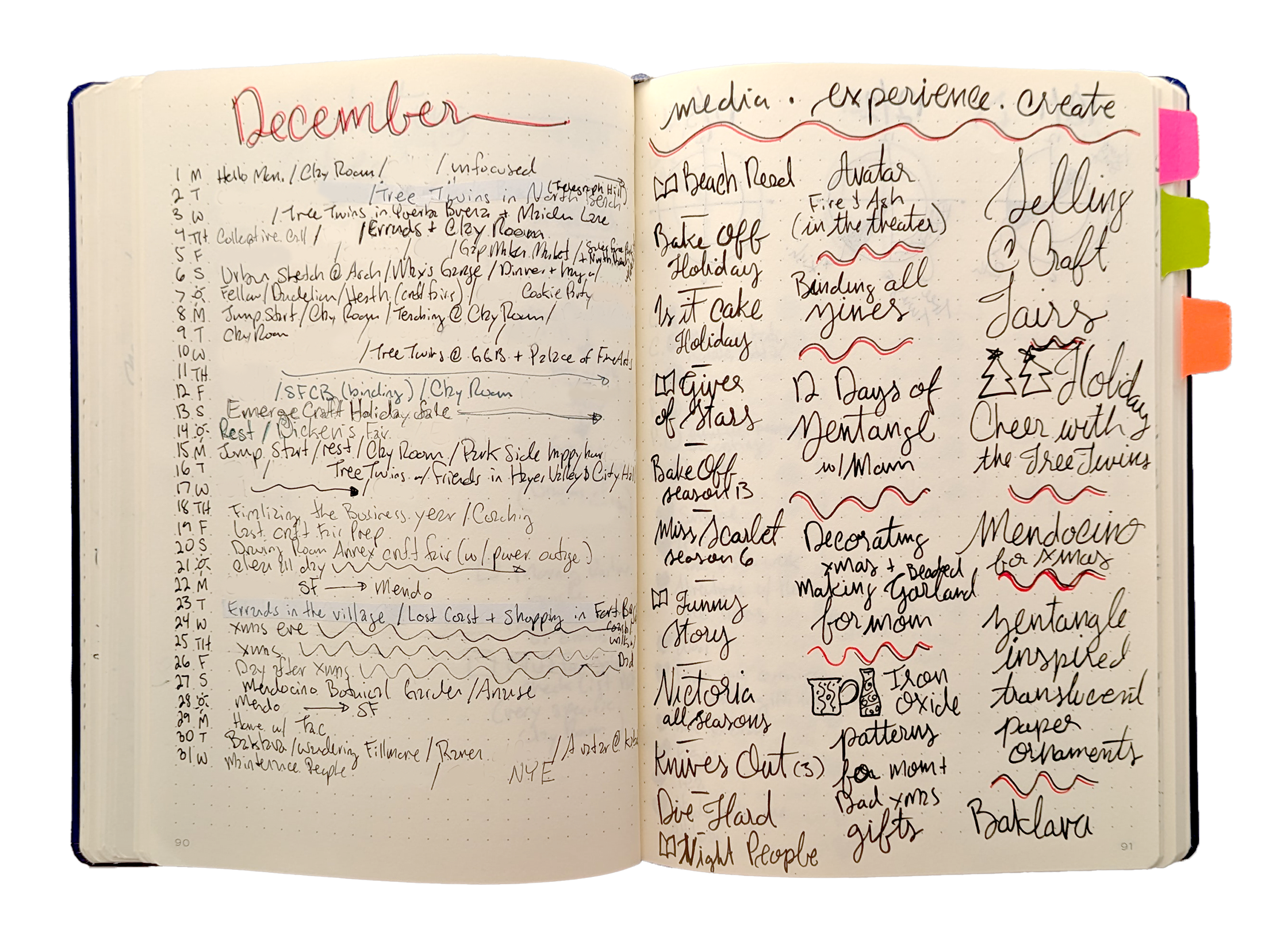
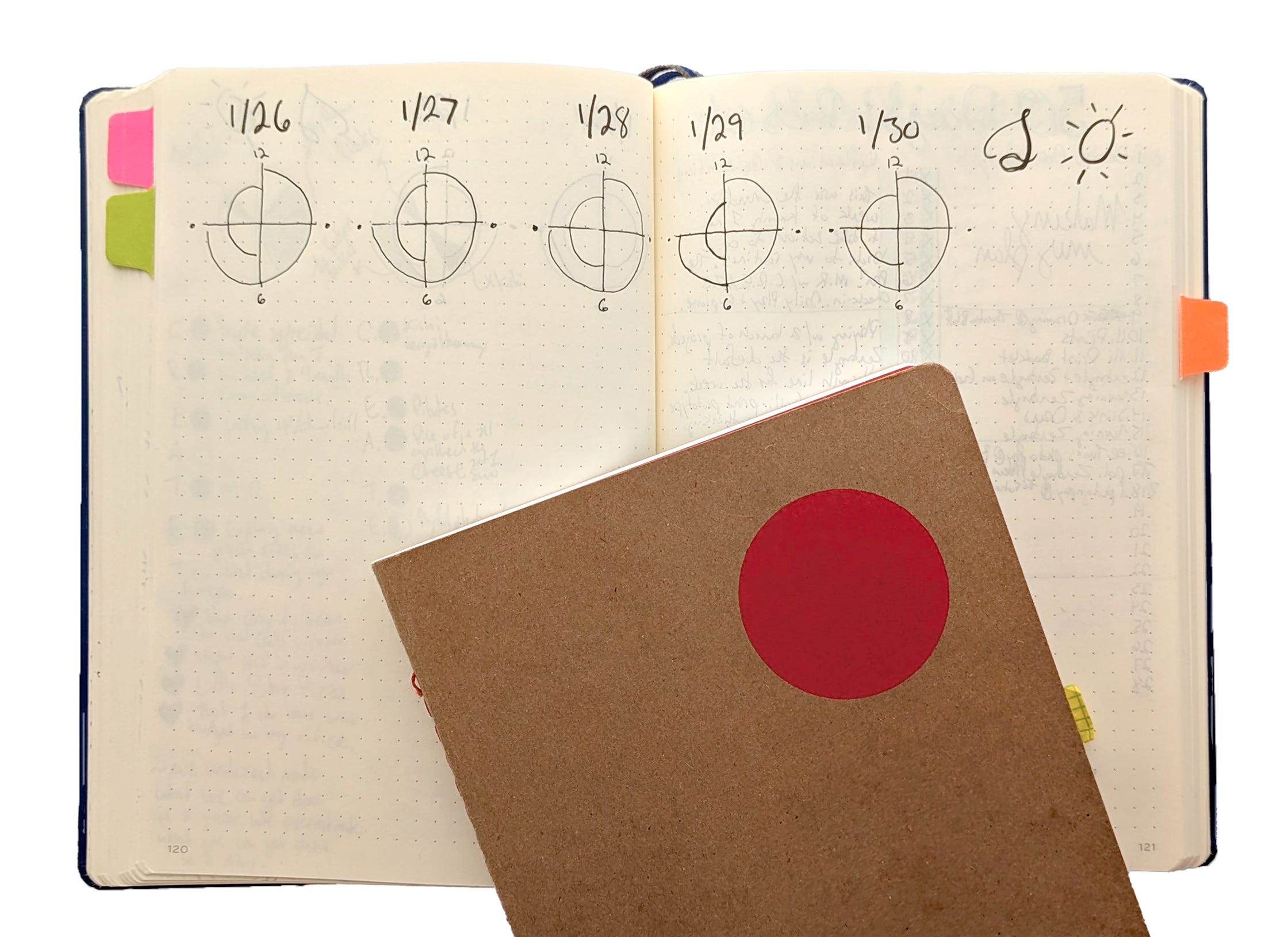
Throughout this post, I’m including photos from the span of 10 years of dot journaling. When I flip through them, I see a souvenir of what I was giving my attention to during different seasons of life. They’re a record of my interests, big goals, with creative evidence sprinkled throughout — calligraphy practice, experiments that didn’t work, pages that sometimes became scrapbooks.
My journal pages might only make sense to my brain, just as only your own journal pages might make sense to you. But the physicality matters — flipping through pages, seeing how my handwriting changes, how each page looks different. It's a way to see myself that digital tools can't capture, where sameness of formatting would flatten the lived experience.
Two spreads that bring consistency to my week
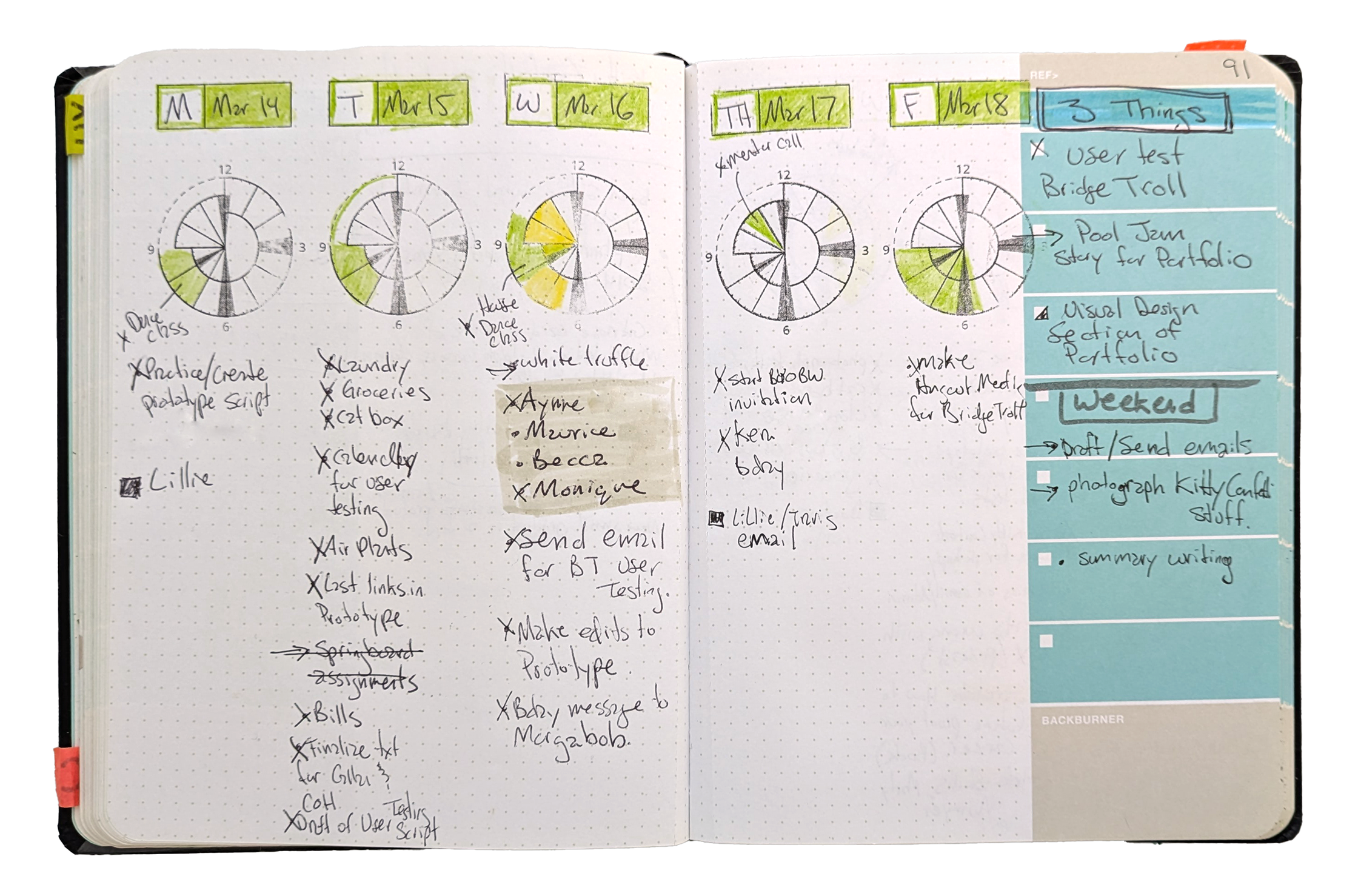
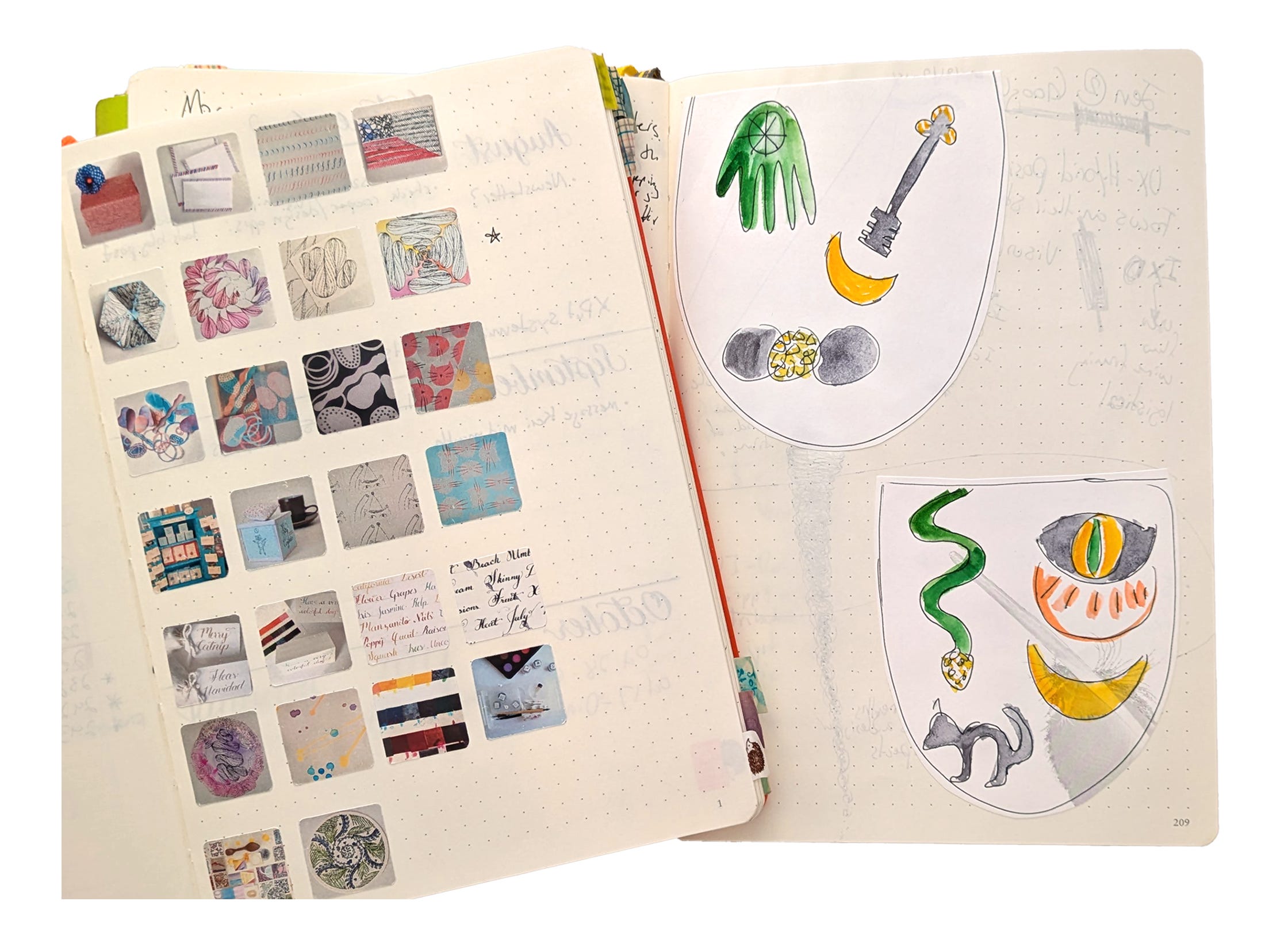
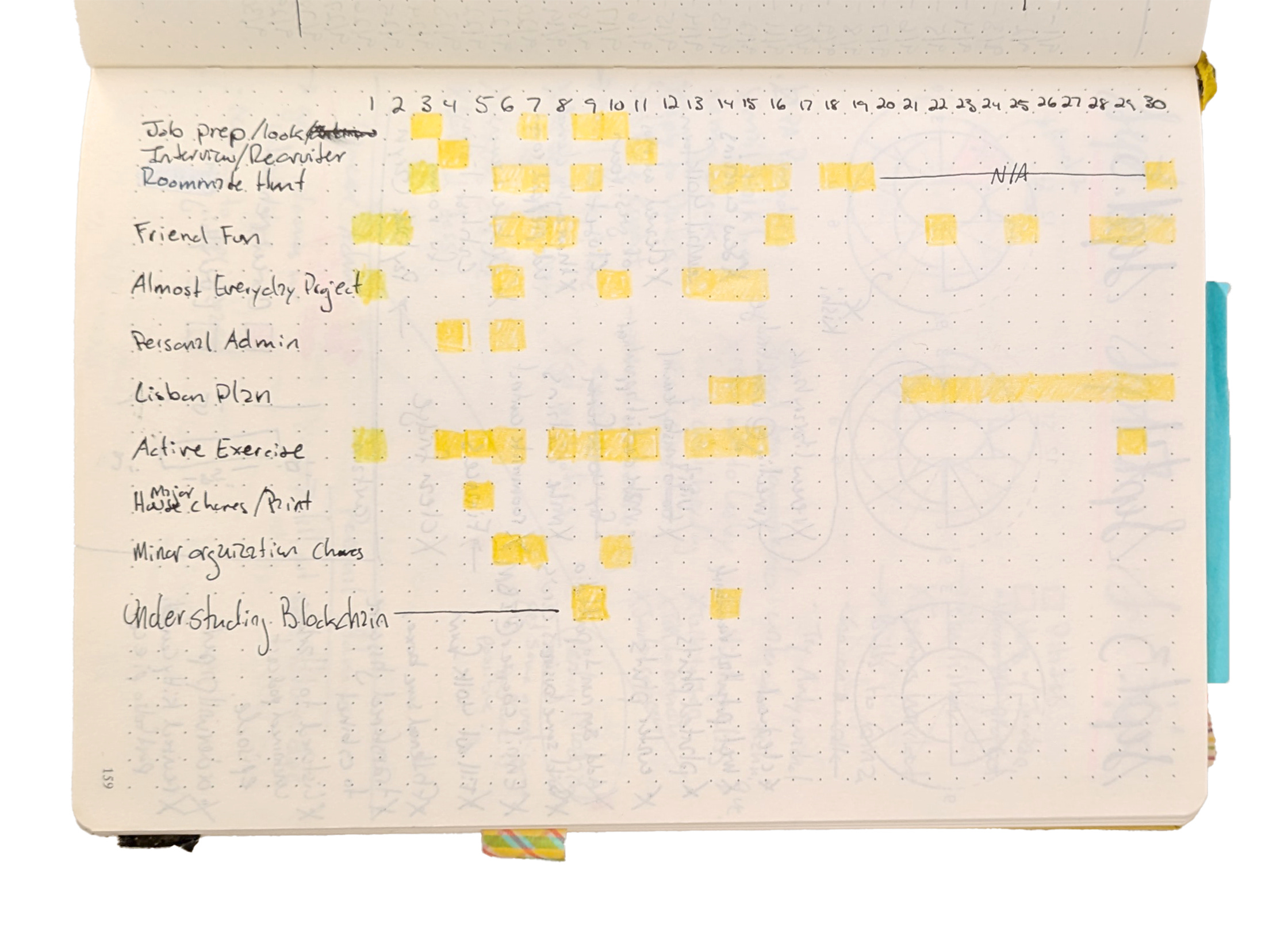
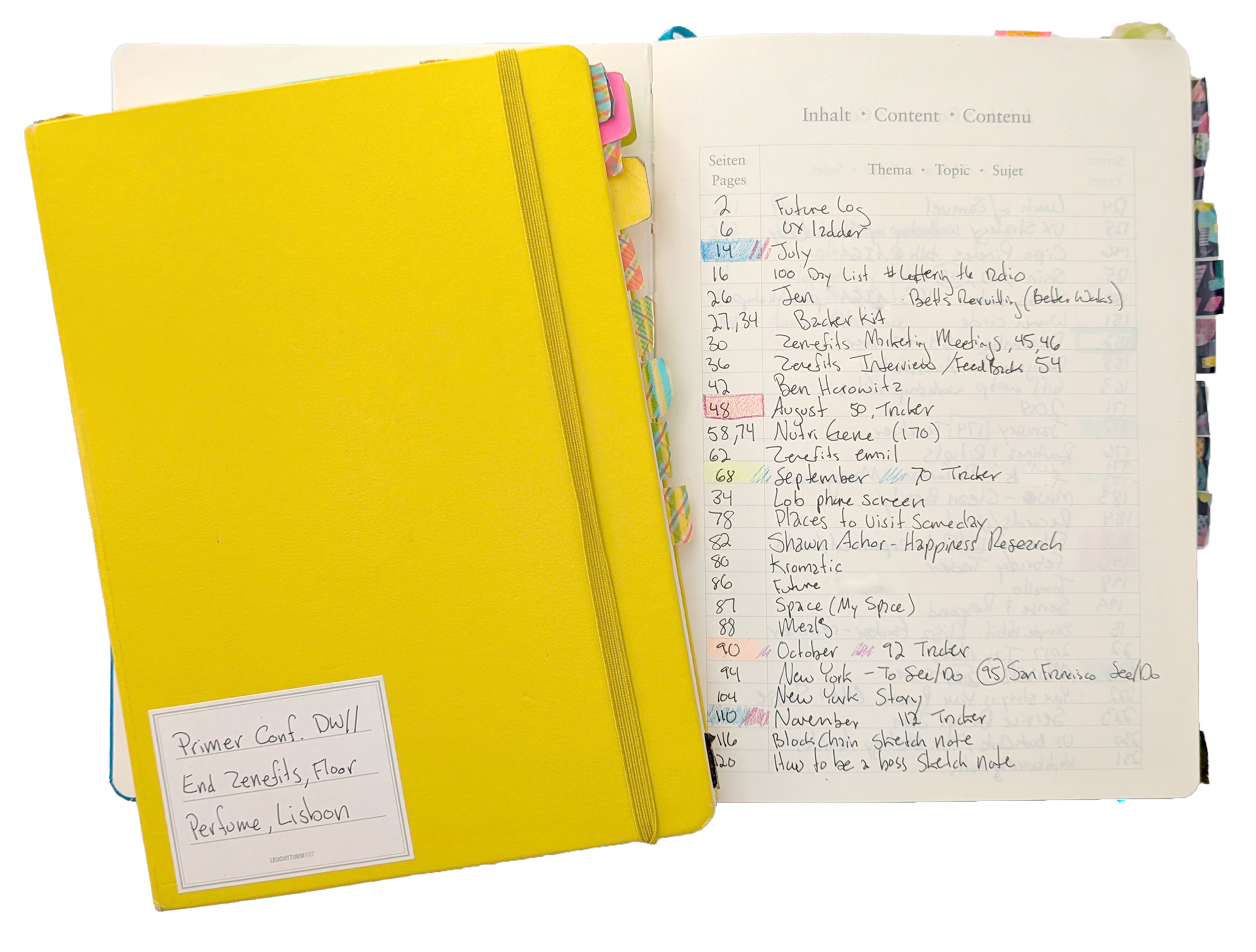
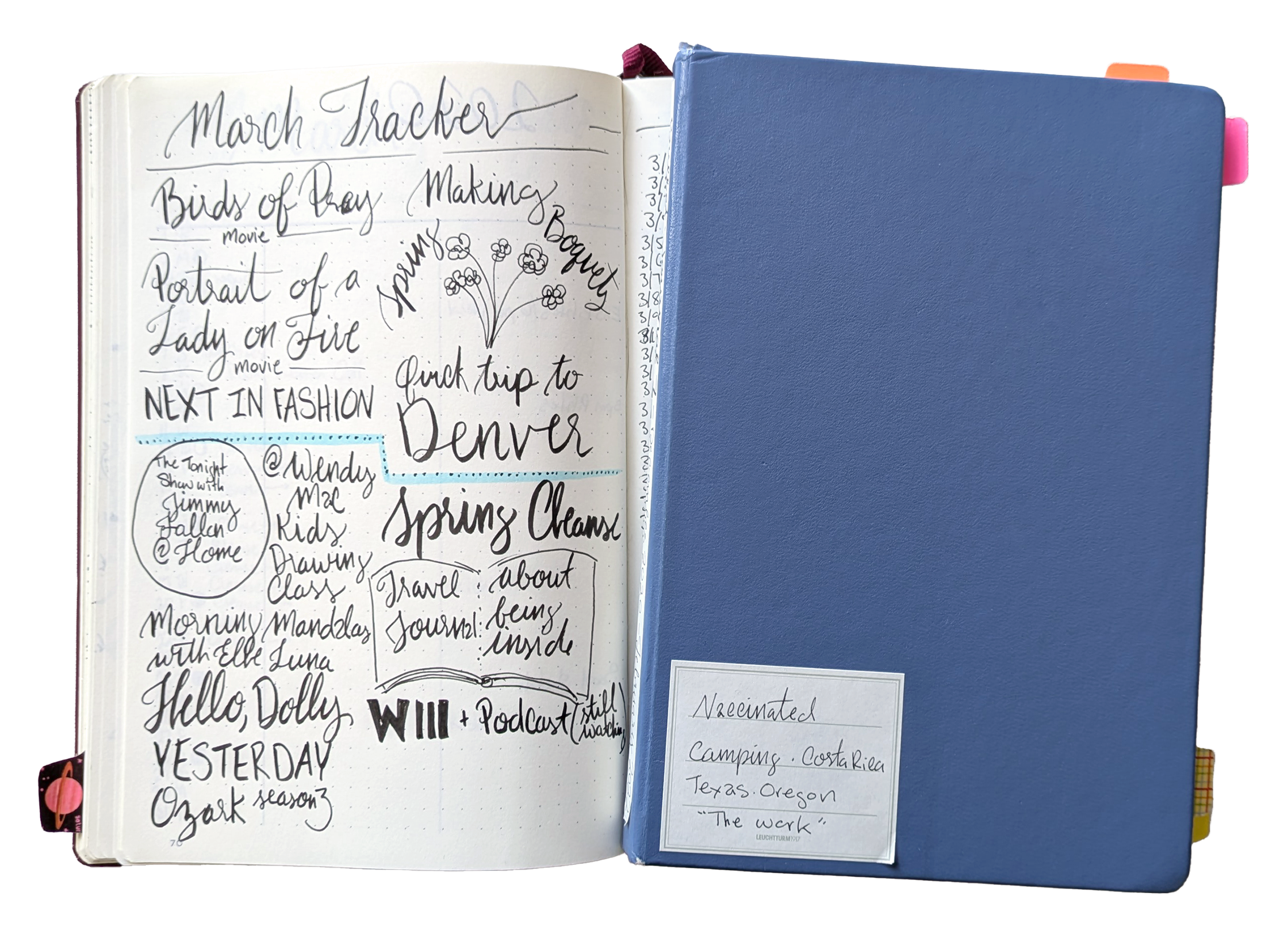
Two core structures ground my practice: a monthly reflection and a weekly overview. The index is what makes it all accessible. This tool felt like a magic key when I got introduced to it. It allows me to see into my full journal at a glance and track down past ideas.
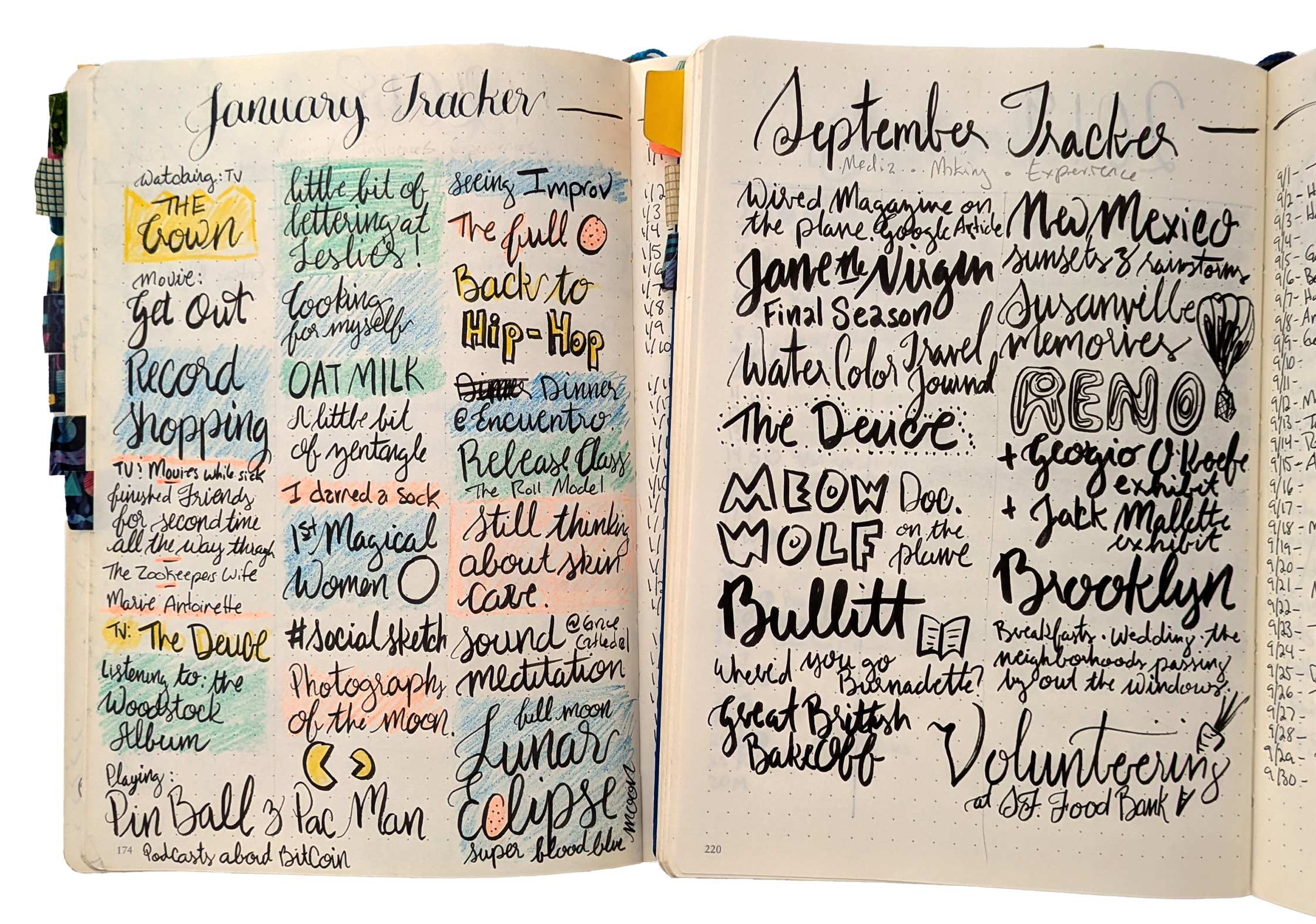
Monthly highlights capture media, experiences, and creative endeavors. Between the index and these reflections, I can quickly see themes and how I spend my time.
A shift in approach
A big shift started to happen a couple of years ago, when I got my ADHD diagnosis. Looking back with this new awareness, I could see dot journaling had been an essential tool all along, and could recognize where I’d been unnecessarily hard on myself trying to fit into techniques that didn't match how my brain works. These journals have been one of the tools for getting to know myself.
Eras of creating my practice
2016 — Getting to know focus and prioritization techniques
2018 — Establishing core practices that have endured
2020 — Focusing on function as a grounding tool during uncertain times
2024 — Reframing and increasing intentional gratitude and reflection
Perfectly messy
It feels vulnerable to share these pages that were intended for only me. There are many areas of my life where I give a lot of care and attention to aesthetics, but for these journals, that hasn’t been the important part. Getting things done and living a life is messy, so I need a place where I can be messy.
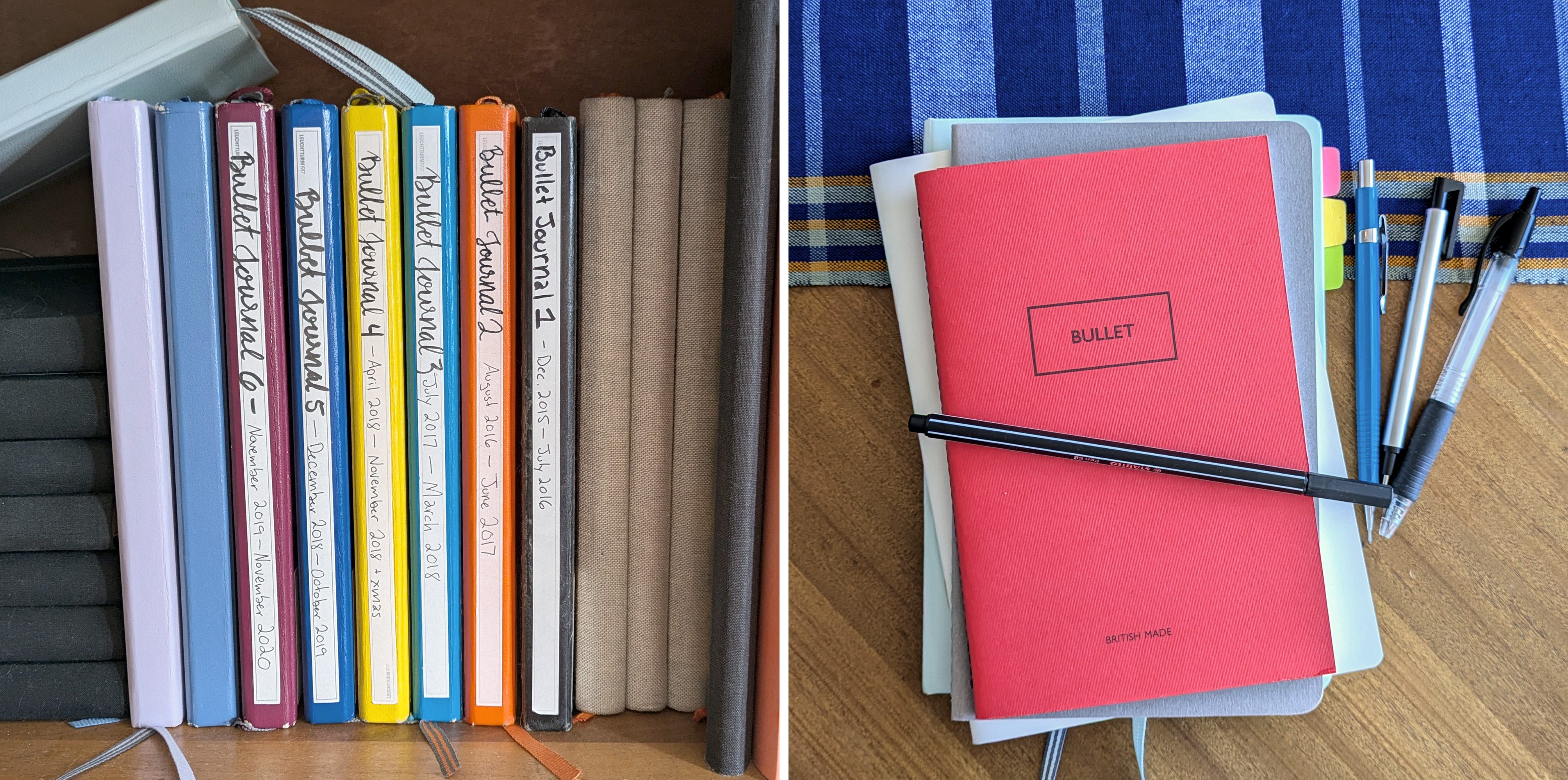
Seeing my 10 journals together, it’s a lot of daily-ish, weekly-ish, monthly-ish activities that add up to years. It makes the passing of time tangible and eases some anxiety around the question: What have I been doing?!
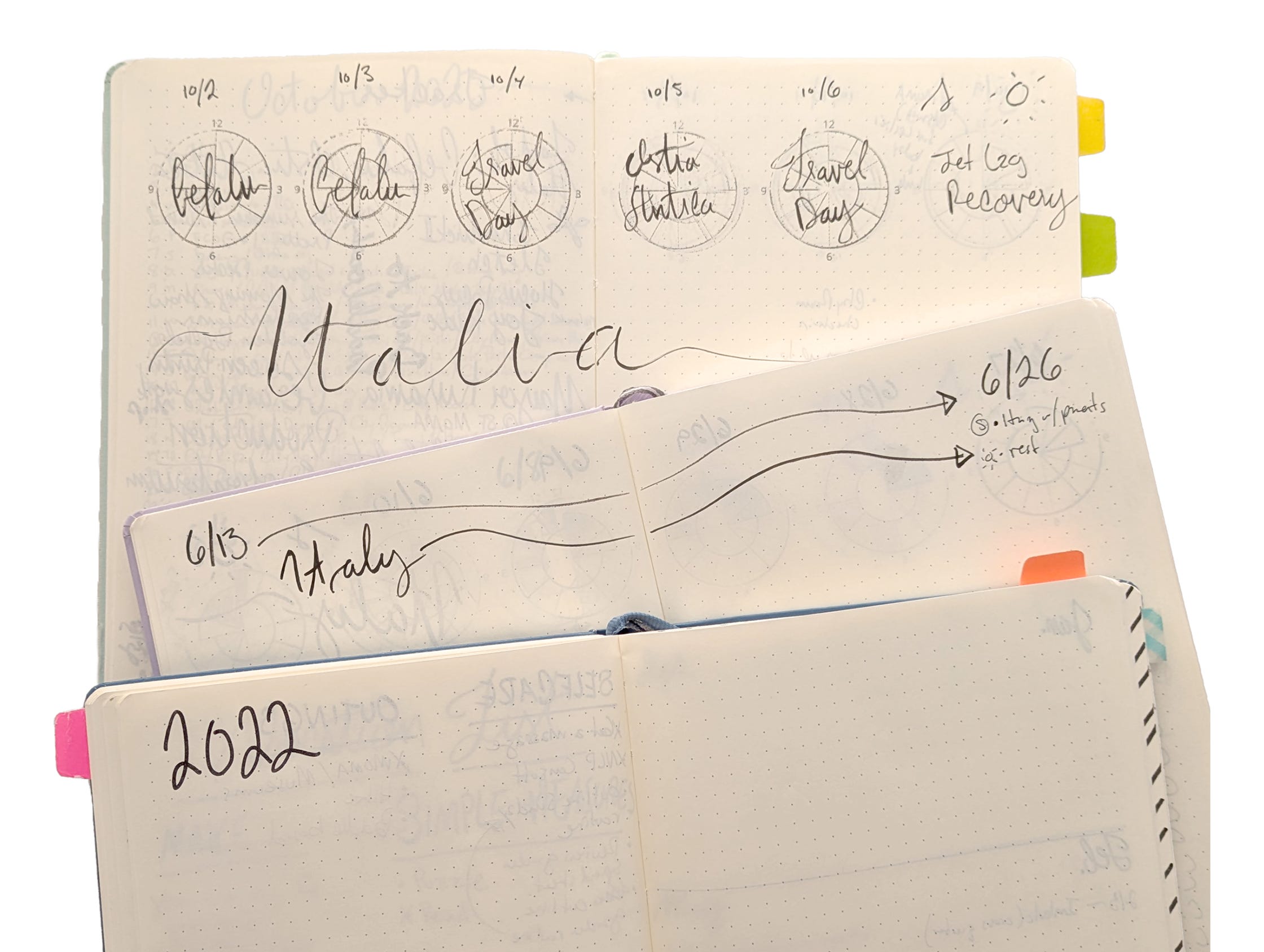
There have been time periods where the journals get overlooked or underutilized because of changes in schedule, life events, or other factors, but I always circle back to this grounding tool. It welcomes me back from vacation. It helps me find focus when I’m feeling frazzled. I've kept up the practice over these 10 years because it's flexible enough to shift with me. It was helpful from day one, even if how I use it now is not the same as December 2015. These imperfect, changing rituals end up being the routines that are ideal for me.
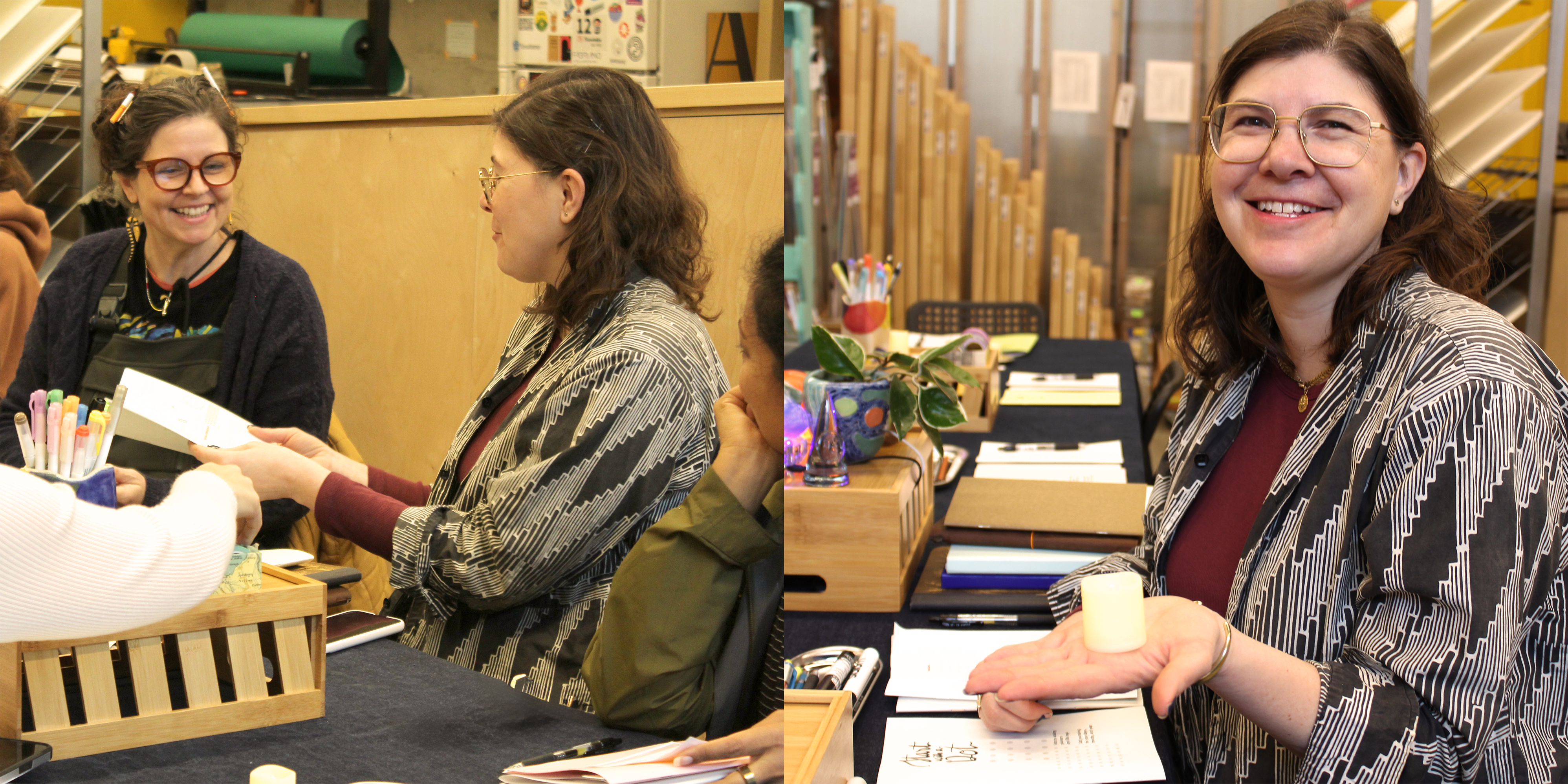
Make time visible: Dot journal with intention
Join me in learning the techniques I’ve been sharing above.
🗓️ Friday, March 27, 2026
🗓️ Sunday, March 29, 2026
📍SF Stationary Fest