
Creative project tracking with a time ladder
Offering 1:1 support for The 100 Day Project

This post and journal framework is useful for any creative endeavor, like a 30-day challenge or The 100 Day Project.
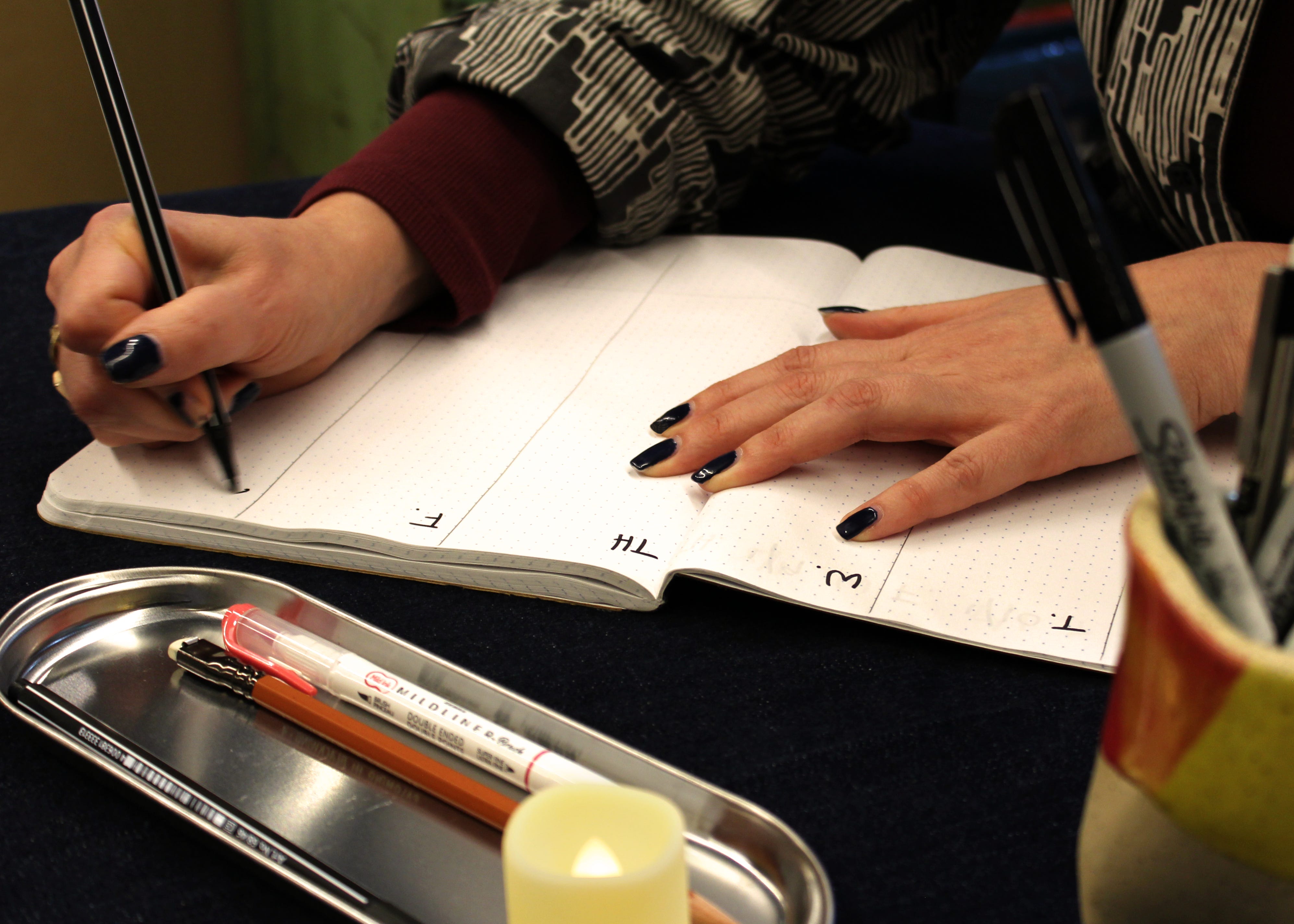
One of the layout frameworks I teach in my dot journal workshops is the concept of a Time Ladder. It’s useful for many long-term projects or tracking progress on a project with an undetermined timeline, like a job hunt. It’s especially useful for any creative endeavor, like a 30-day challenge or The 100 Day Project.
Time Ladder Journal Framework
A time ladder is a way to see any project unfolding and acts as simple project planning. It can be used for projects with clear timelines or projects that are less defined because it allows for reflecting on the activities that have been experienced and see the passing of time.
This is meant to be drawn in a dot journal planner or any regularly used notebook. Dates represent the passing of time and create a “ladder” in the middle of a page. The segments can be broken up however you please. Generally, the time is broken up into reasonable chunks of time to track. It could be weekly, bi-weekly, or monthly.
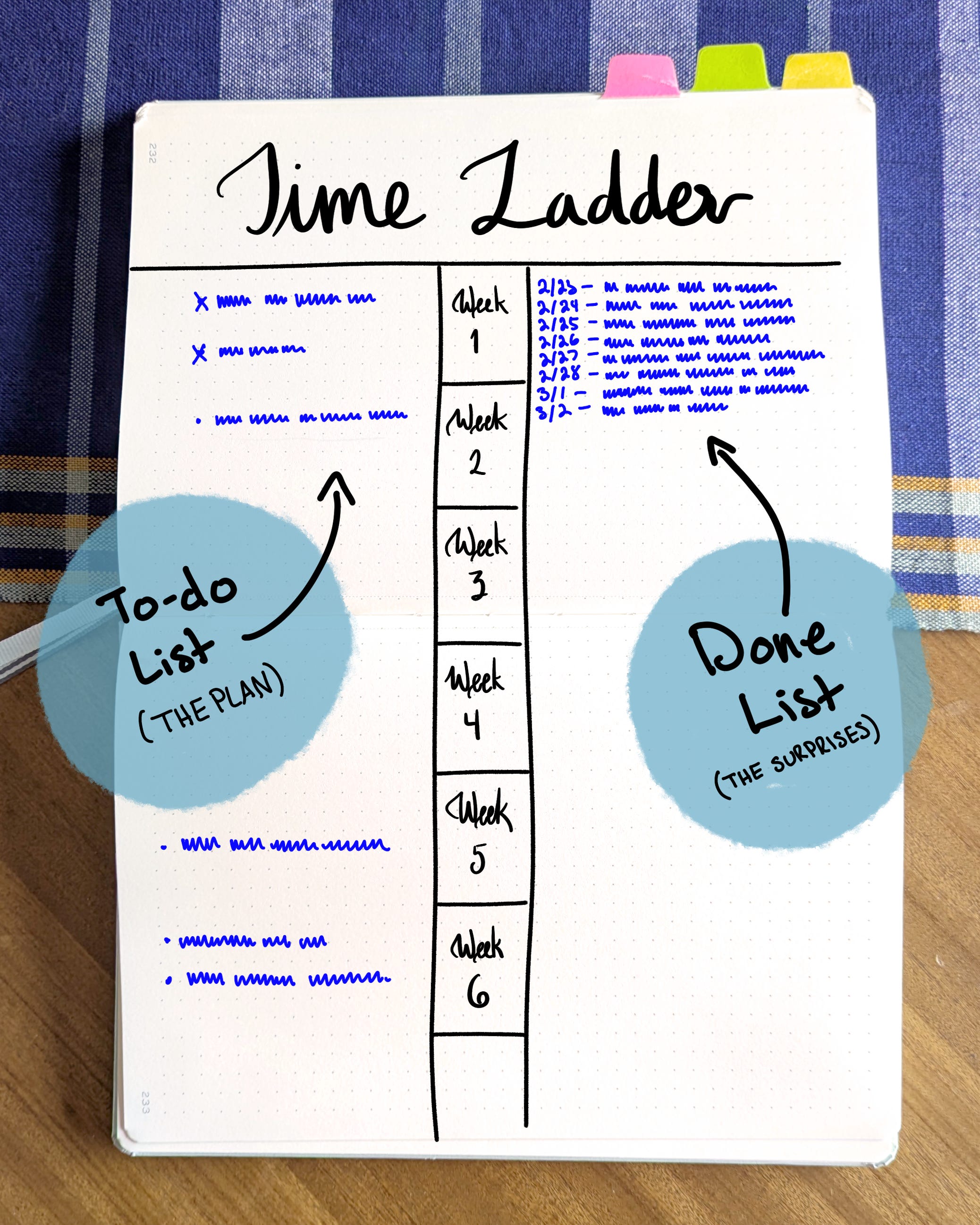
Use the left side of the page to plot out key points in a project. On the right side of the page keep track of what was done. This could include important convos and the surprises that inevitably happen when working on a project with a longer timeline.
Benefits
Planning key tasks
Keeping track of tasks and activities further out in a project
Visually see progress being made on a project
Use as a self accountability tool
Adjusted Time Ladder for the 100 Day Project
This is a twist on the tool for use alongside a 100 Day Project.
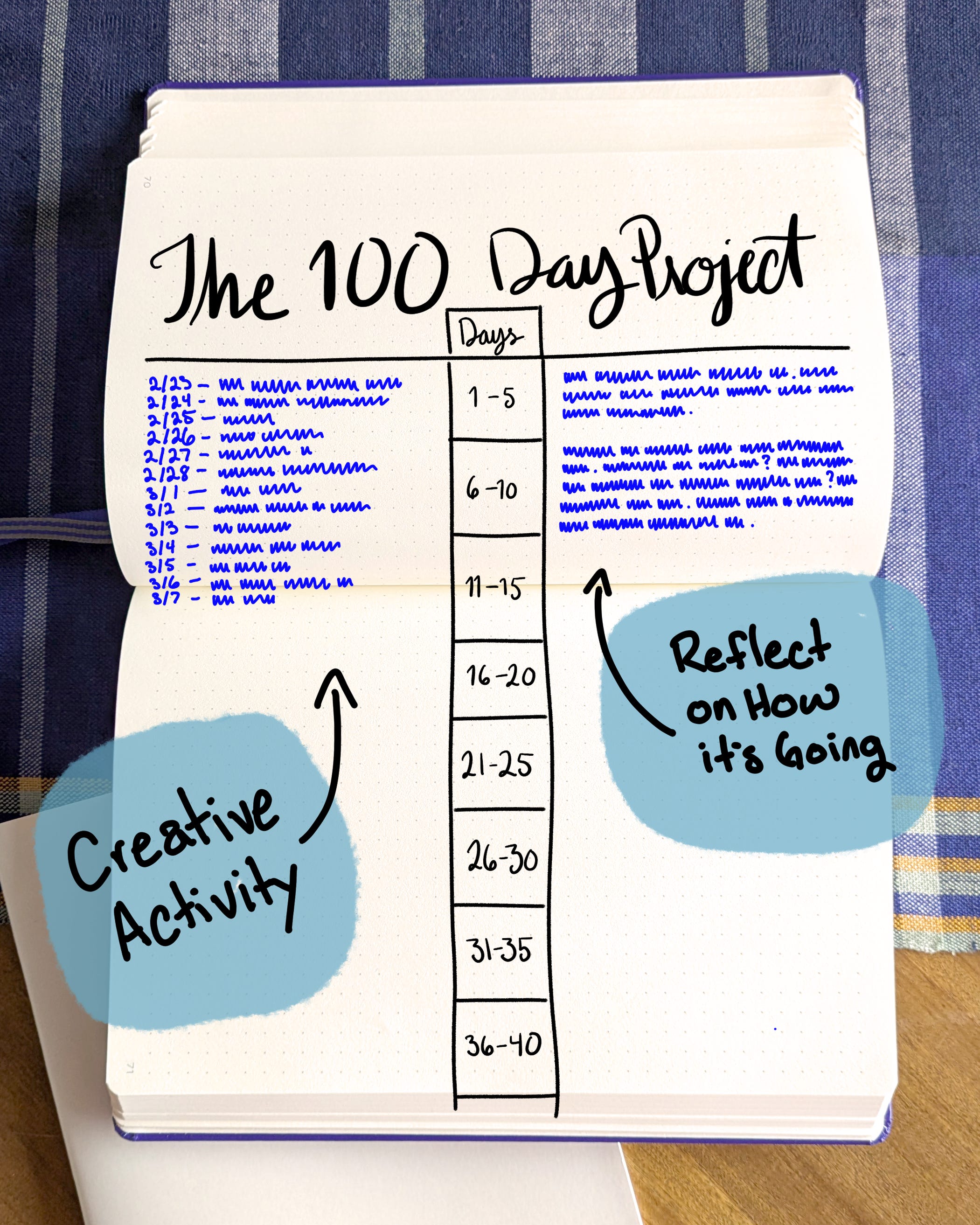
Instead of it being a tool of tasks, the left side can be a record of what was worked on or made each day. Use the right side for reflection during the project, which encompasses a significant chunk of the year.
Benefits
A record of creativity
Visually see how much time is left in the 100 Days
This could serve as an alternative to posting images every day on social media if you want to keep a project less public
Note feelings and insights as the project progresses
Internet research shows Bill Westerman being the originator of the Time Ladder concept.
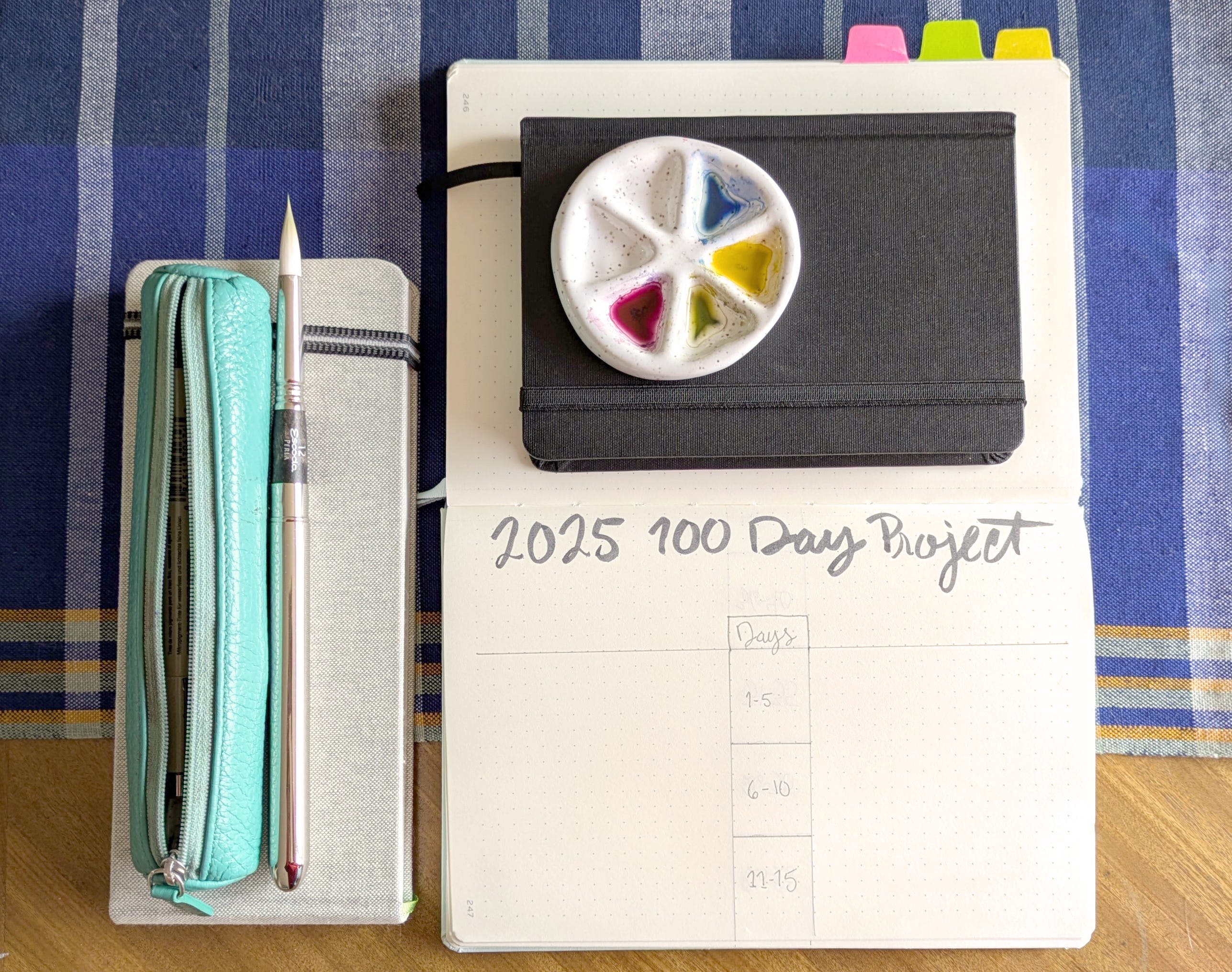
Why do a 30-day creative challenge or The 100 Day Project?
These types of projects are a daily reminder to take time for creativity. Often done alongside others, they also provide some structure for accountability.
The mental challenge
Doing something consistently every day for a time period is the challenge. But if a day is skipped, it doesn’t mean failure. Sometimes doing the thing includes just thinking about the thing or needing to take a break from the thing. That might sound counterintuitive to project success, but paying attention and making space for creativity is the whole point. So it’s a great time box for creative success in whatever form it takes!
As a participant for 10+ years of The 100 Day Project, I’ve written about my project tips here. In 2024, I flashed back to all my projects on Instagram.
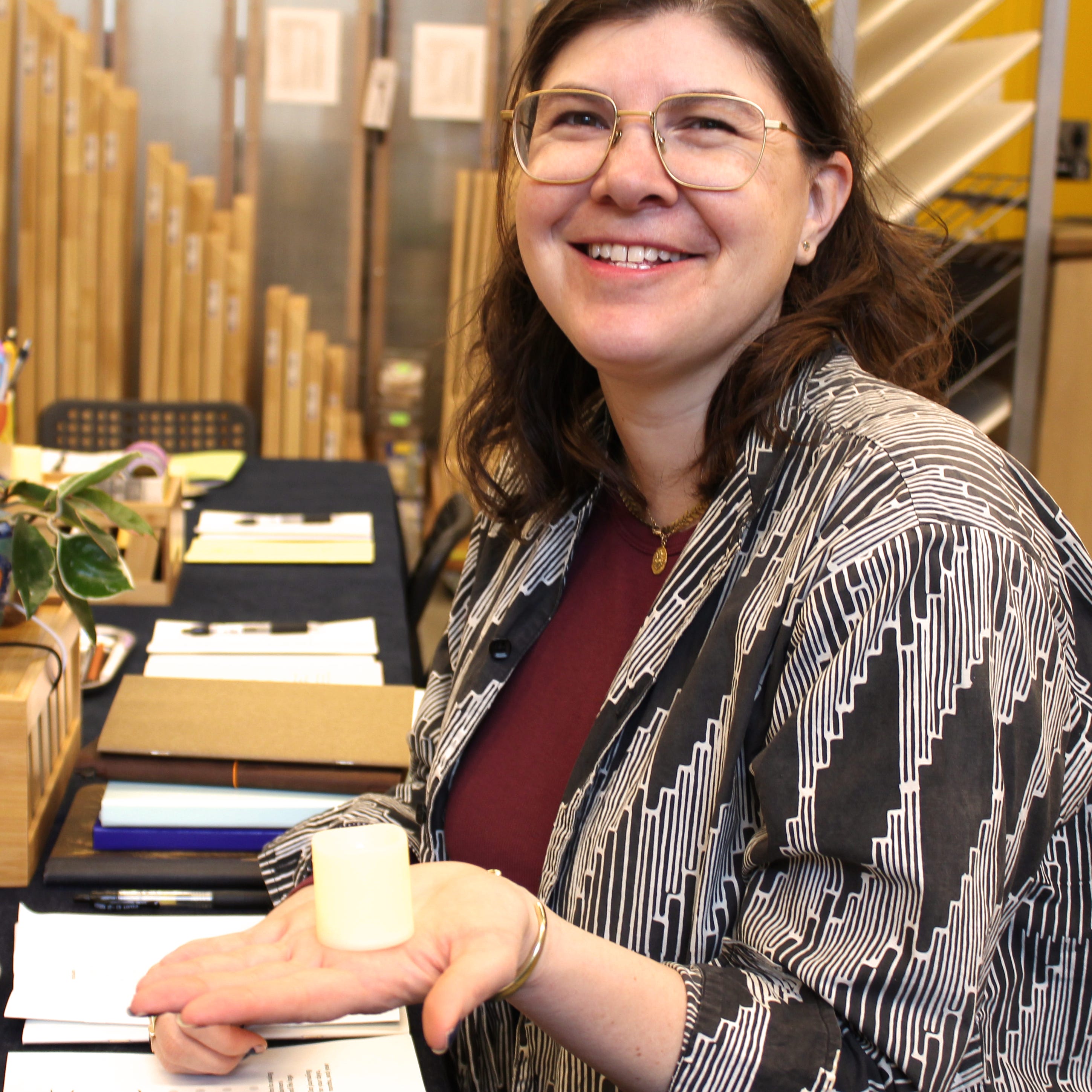
Offering one-on-one creative support
It can be incredibly rewarding to experience completing a 100 Day Project or creative challenge. The first project I outlined for myself was very simple. I found that after I knew I could complete a project, subsequent projects felt easier and easier.
If you’ve struggled to complete a project in the past, I’d love to help you! Let’s get your project started and keep it going this year. I offer 30 min 1:1 creative support sessions. We’ll chat through your project, potential obstacles, and ways you can set yourself up for your time box of creativity.